Section 2
We are committed to the green transition, focusing on decarbonisation and nature as our key priorities.
We remain committed to decoupling growth from environmental impact. As our business grows, our ambition is to reduce intensity-based carbon emissions every year, ensuring that growth does not simply scale emissions.
Understanding our footprint is a requirement for reducing it. We therefore work with ESG consultancy Cemasys to measure and analyse our emissions, tracking both absolute emissions and intensity-based metrics across all scopes.

DECOUPLING CARBON EMISSIONS FROM GROWTH
Decoupling growth from environmental impact is one of the main challenges behind every company's license to grow. Can we expand as a business while reducing our carbon footprint year by year?
Without decoupling, growth simply scales impact. The challenge that needs to be solved is to build a model where growth comes with lower carbon intensity through stronger decision-making across everything from product development to how we build stores.
Another major constraint is that climate accounting is only as strong as the data behind it. For most companies in our category, the majority of emissions are within the value chain, and improvements depend on better supplier data, better emission factors, and deeper product-level insight before reductions can be measured with precision.
As we continue to expand, it is vital that our environmental reporting evolves alongside our business. We track our emissions both in totality and relative to revenue, ensuring we have a transparent view of our ability to decouple growth from our carbon footprint.
DECREASING OUR TOTAL & INTENSITY-BASED EMISSIONS FROM 2024
As Tom Wood continues to grow, we recognise the importance of measuring our environmental impact in a way that reflects our business expansion.
To achieve this, we introduced an emissions intensity factor with last year’s report, tracking our emissions relative to revenue over time. This approach provides a clear understanding of whether we are decoupling emissions from growth, helping us assess our progress in reducing our carbon footprint while scaling responsibly.

This year's total emission reduction is primarily a result of targeted actions connected to two of our most material emission drivers that are directly linked to volume and scale: transportation and packaging. In addition, our main driver of emissions in 2024, business travel emissions, was significantly lower in 2025.
During this year, we redesigned our packaging programme with the explicit aim of reducing emissions. Although launched halfway through the year, this contributed to lower Scope 3 emissions.
The decrease in transportation emissions is directly linked to expanded investment in Sustainable Aviation Fuel through the DHL GoGreen Plus programme, which enabled us to reduce transportation emissions despite significant growth in distribution volumes.
In addition, we maintained the same level of business travel activity despite significant business growth during the year. Combined with a decrease in emission factors related to travel in 2025, emissions in this category significantly decreased.

Our Corporate Carbon Footprint (CCF) is calculated in accordance with the Greenhouse Gas Protocol (GHG Protocol), the leading international standard for carbon accounting.
According to the GHG protocol, we categorise emissions into three groups or scopes. By following this rigorous framework, we ensure our reporting is transparent, consistent, and comparable across the global jewellery industry.
SCOPE 1
Emissions from sources that are directly owned or controlled by Tom Wood, such as facilities or company vehicles.
SCOPE 2
Emissions from the generation of purchased energy used by the organisation. Examples: purchased electricity, heating, and steam
SCOPE 3
Emissions that occur in the company’s value chain, including both upstream and downstream emissions.
Upstream refers to emissions which derive from the activities of suppliers of the company, such as emissions from purchased goods and services, transportation of goods to warehouse and business travel.
Downstream emissions are generated after a product leaves the company’s ownership, such as transportation of products to customers, use of sold products and end-of-use activities.
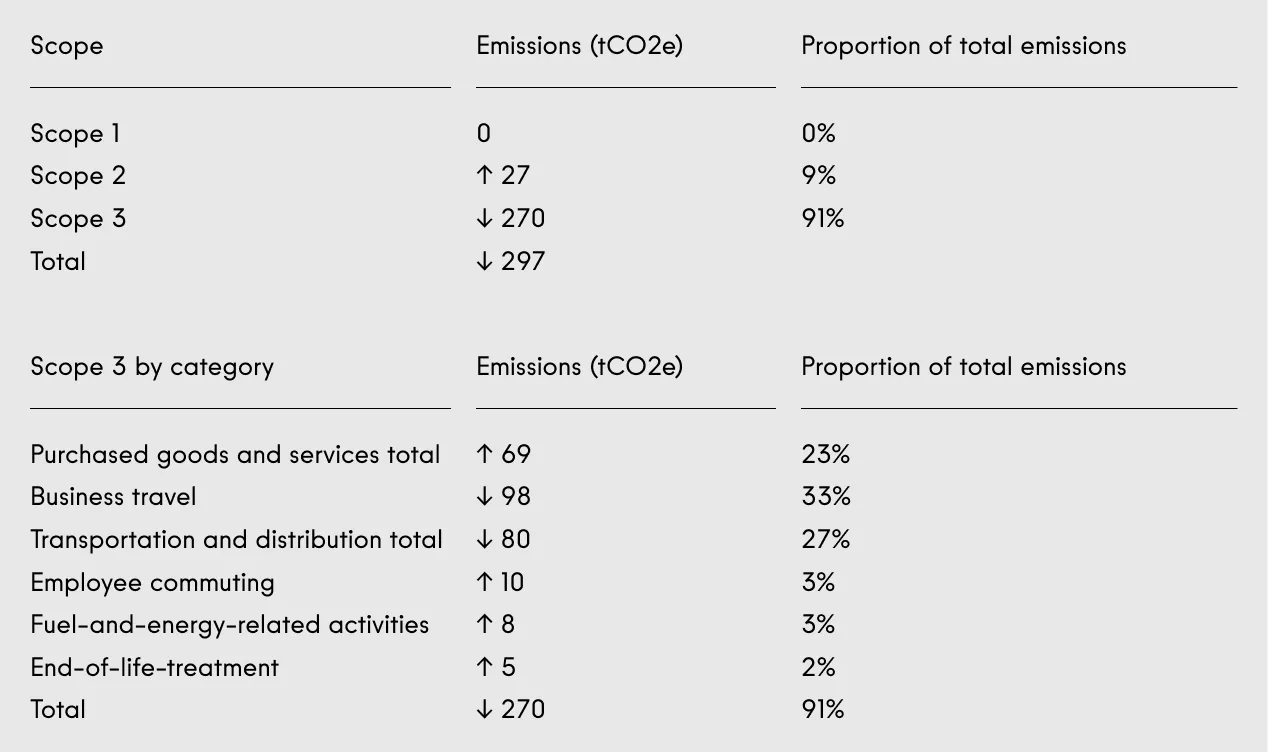
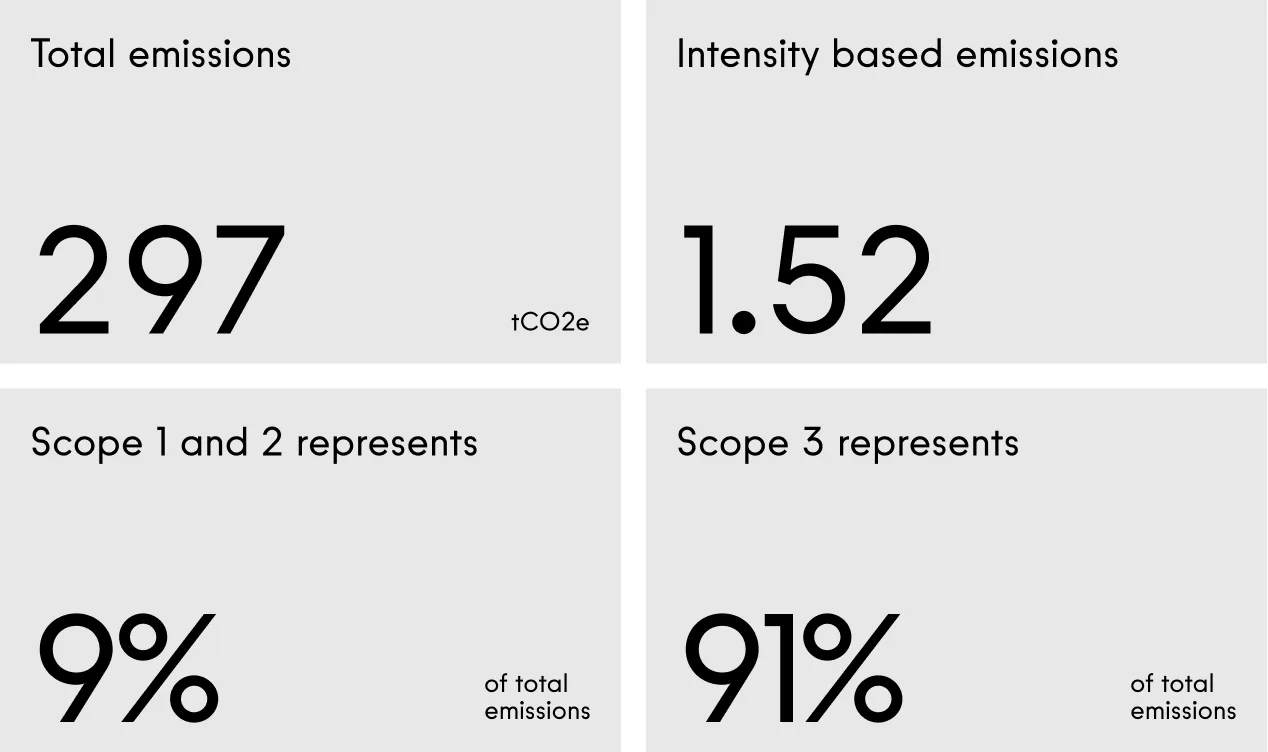
Our environmental impact has been broken down by scopes and categories per the GHG Corporate Standard and is expressed in tonne carbon dioxide equivalents (tCO2e).

WE RECOGNISE NATURE AS A FUNDAMENTAL STAKEHOLDER, ESSENTIAL TO BOTH OUR CRAFT AND OUR FUTURE.
Beyond climate change, we are committed to addressing biodiversity loss and ecosystem degradation, some of the most critical long-term risks facing the jewellery industry.
Guided by our Nature Playbook, developed with the Watch & Jewellery Initiative 2030 and The Biodiversity Consultancy, we use frameworks like ENCORE to prioritise action where our influence is greatest. Since our primary impact occurs upstream in the extraction of virgin materials, our strategy is rooted in a clear mitigation hierarchy: avoidance first.
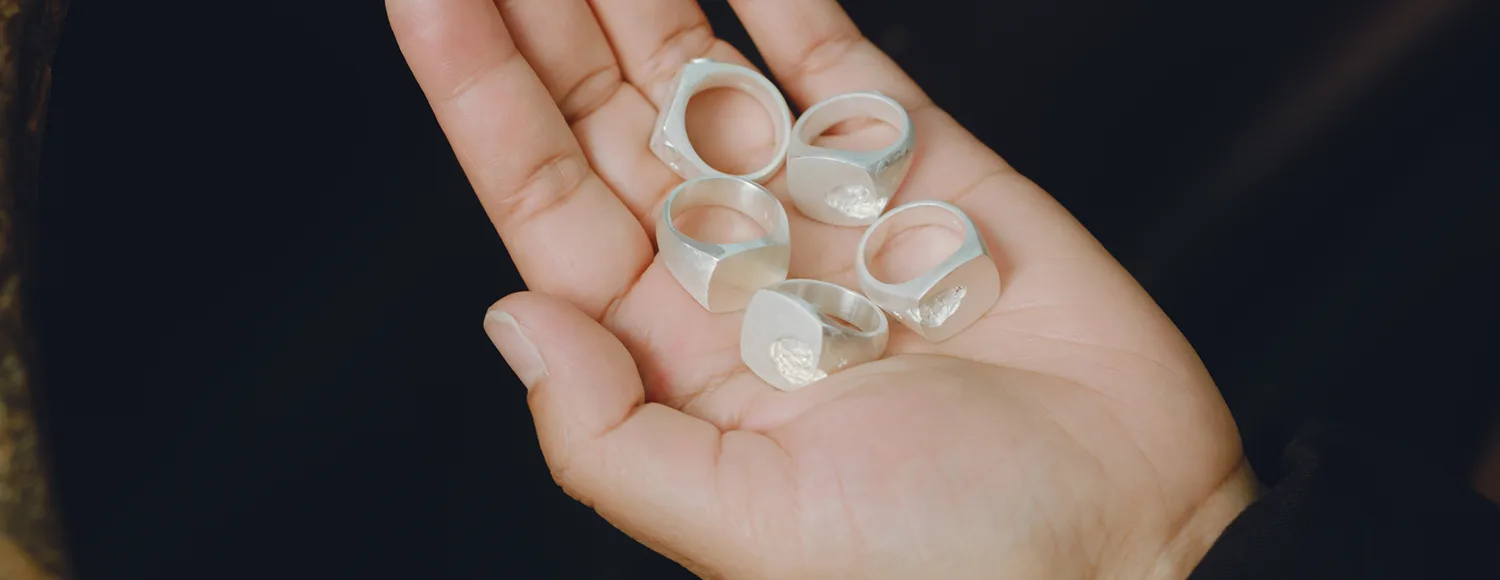
By prioritising recycled and lab-grown alternatives over resource-intensive virgin materials, we significantly reduce our ecological footprint.
In 2025, this approach led to three key breakthroughs:
- 100% Transition: Full shift to SCS-007 certified lab-grown diamonds
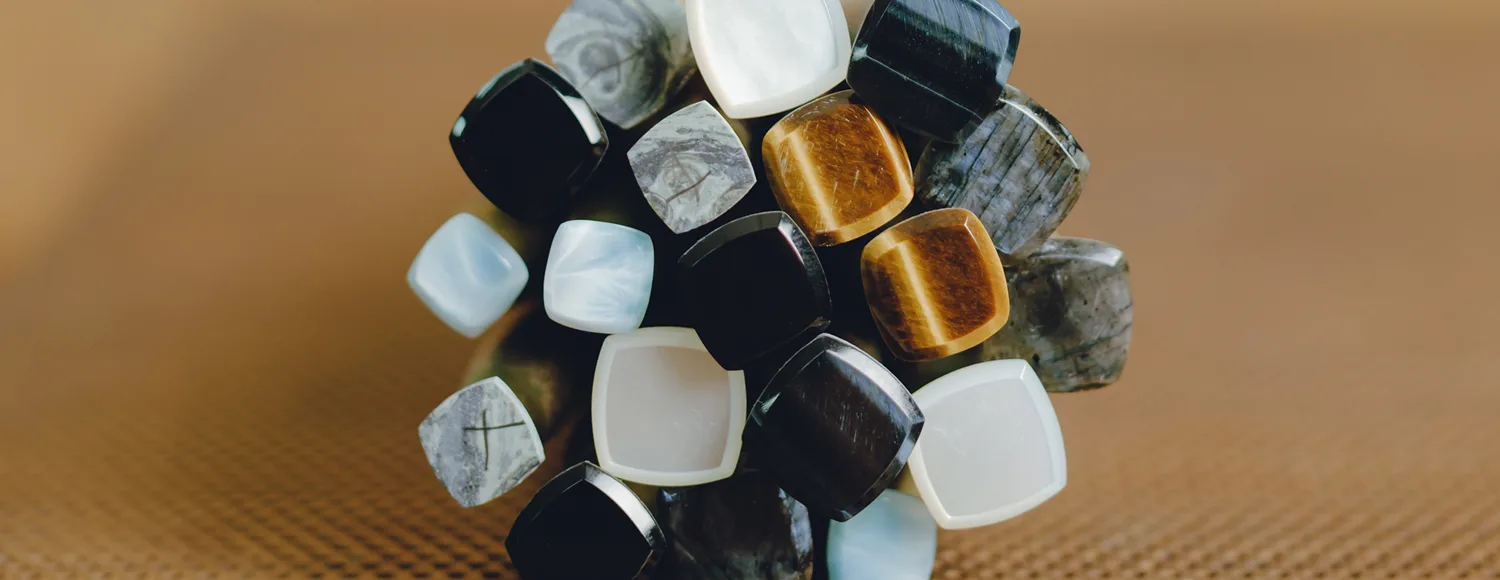
- Mine-to-Market: The launch of 100% traceable Norwegian Larvikite
- Recycled Packaging: Re-engineering our jewellery boxes using 100% recycled aluminum to materially reduce nature and climate impact
Where impact cannot be fully avoided, traceability becomes essential. We believe we cannot improve a system we cannot see; transparency allows us to verify how ecosystems are treated and collaborate on meaningful improvements.
While our direct relationships are with Tier 1 manufacturers, we use these partnerships to drive a cascading effect upstream. By setting binding requirements, we directly influence sourcing practices for precious metals and gemstones, ensuring our responsibility standards reach far beyond our immediate operations.
Learn more about our responsibility efforts: